
PlayMakers celebrates 50 years of groundbreaking theater, honoring its rich legacy while setting the stage for a bold new era
By Sharon Kinsella | Photography by John Michael Simpson
During its inaugural 1976-77 season as a professional theater-in-residence, PlayMakers Repertory Company staged Arthur Miller’s “The Crucible” in Historic PlayMakers Theater. Fifty years later, Kimberly Belflower’s “John Proctor Is the Villain” helps anchor the company’s semicentennial lineup, calling back to its origins with a contemporary response. Each of the six main stage productions chosen for the milestone season, titled “Legacy Now,” shares a similar resonance with tradition, gesturing to where PlayMakers has been while mirroring the questions it faces as it moves into its next 50 years. “
We want to celebrate the foundation on which we have stood, look at where we are now, and then propel ourselves forward,” says Vivienne Benesch, who joined PlayMakers in 2016, succeeding Joseph Haj as producing artistic director.
“We punch above our weight. There’s an expectation of world-class theater that we fulfill a lot of the time, but we’re actually this fabulously mighty small team here.”
PlayMakers has long been known for its excellence in producing classic works, in part because of its role as a training ground for the UNC Department of Dramatic Art, the second oldest department of its kind in the country. But that strength sometimes came with a tinge of stuffiness – an “eat-your-vegetables theater,” as one faculty member put it during Vivienne’s interview process. “You need your vegetables – they’re good [for you],” Vivienne says, “but we wanted to dust that off and be the place where you don’t want to miss a show.”

Vivienne has spent her decade at the helm championing three programmatic pillars – reimagined classics, Southern stories and new work – and this season leans on all three at once. “John Proctor,” for example, reexamines “The Crucible” through a present-day high school English class in rural Georgia, while “Oedipus: King/Colonus,” retells Sophocles’ tragedies through a new world-premiere adaptation commissioned by PlayMakers. Since the pandemic, mental health has also become an area of focus.
The shift has also broadened whose stories appear onstage – and who gets to tell them. “Joe really started doing a lot of that work [20 years ago],” Vivienne says, “but it’s exploded in these past 10 years – both in how we cast and in the playwrights we choose to produce.” She set that intention with the first show of the first season she produced: “Draw the Circle,” Mashuq Mushtaq Deen’s solo piece about a trans man’s transition that premiered in August 2016, a few months after North Carolina’s House Bill 2 – the so-called “bathroom bill” – took effect. The show poster still hangs on her office door.
“It represents what I wanted to have happen at PlayMakers: that we continue to draw our circle wider and wider,” she says. Vivienne is careful, though, to distinguish inclusion from any particular agenda. “I’m interested in how theater can open us up to seeing each other’s commonality more than about saying, ‘This is what you should think,’” she says. “I hope there’s a kind of curiosity and wonder [in our work] and that we are challenging our audiences.”
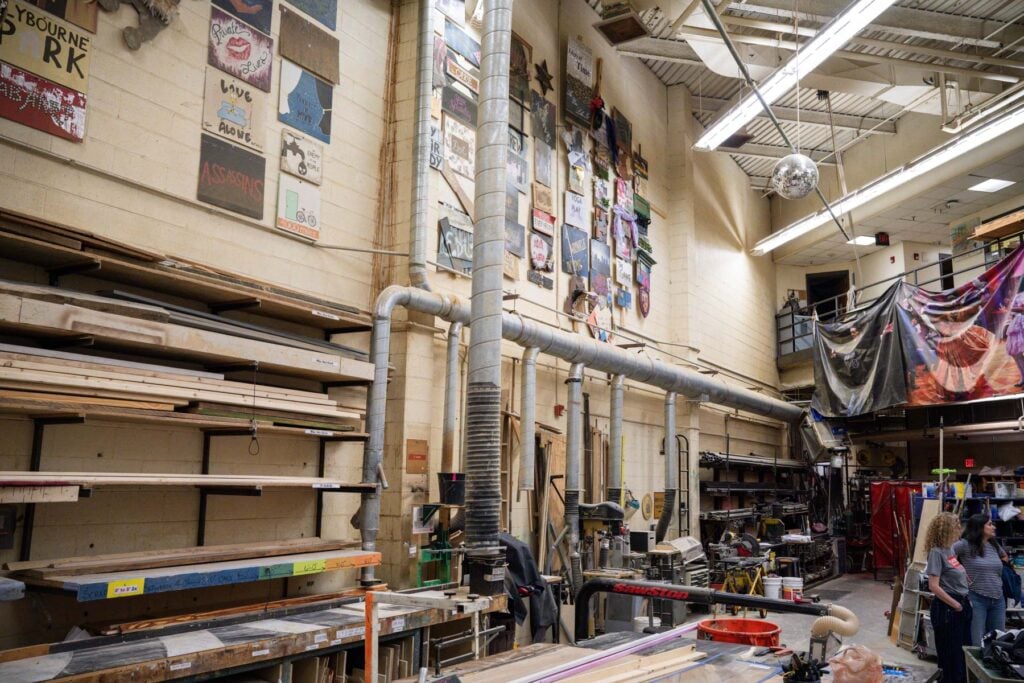
One of PlayMakers’ defining strengths has stayed constant even as its artistic ambitions have evolved: its unusual partnership between professional theater and university training. Vivienne compares the model to a teaching hospital: students in the department of dramatic arts’ acting, technical production and costume production MFA programs spend their mornings in class and their evenings rehearsing alongside the same faculty artists who teach them, joined each season by guest actors, directors, designers and dramaturgs.
This structure traces its roots to 1918, when Frederick “Proff” Koch founded the Carolina Playmakers, a troupe of students, teachers and community members that performed at UNC and toured throughout the Southeast. Decades later, that tradition merged with the department of dramatic arts’ graduate acting program to create PlayMakers Repertory Company – both a professional regional theater and a training institution in one.
PlayMakers: A Brief History
1918 Frederick “Proff” Koch founds the Carolina Playmakers, a company of students, teachers and community members performing at UNC and across the Southeast.
1924 Smith Hall becomes PlayMakers Theatre (now Historic PlayMakers Theatre), the first dedicated theater building on a U.S. state university campus.
1936 The department of dramatic art is formally established, making UNC the second university in the U.S. to have a department dedicated to theater literature and practice.
1975 Tom Haas and Arthur Housman begin referring to the graduate-level acting cohort’s productions as PlayMakers Repertory Company.
1976 Carolina Playmakers and PlayMakers Repertory Company are combined to become both a professional company and a theatrical training institution in one.
1998 The Center for Dramatic Art opens, bringing PlayMakers and the department of dramatic art together in one facility.
2026 PlayMakers Repertory Company celebrates its golden anniversary.
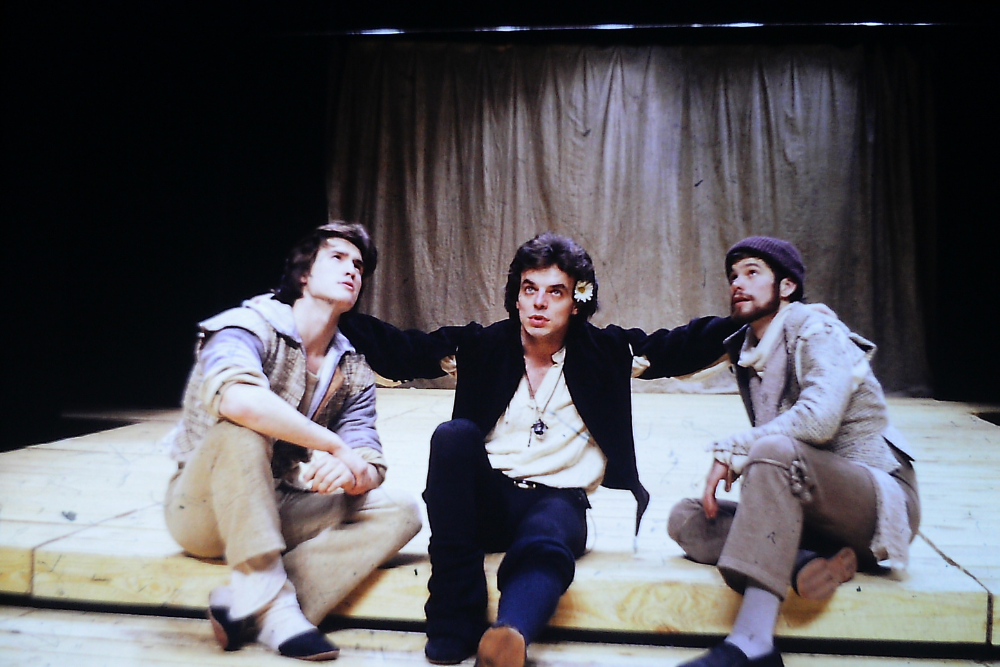
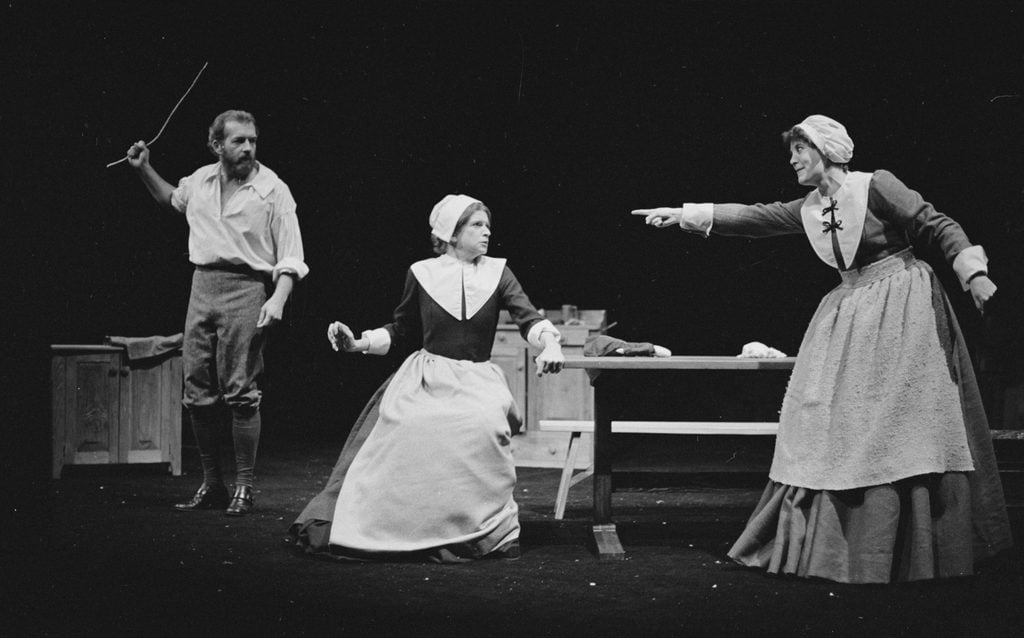
Few people understand the value of that model better than Ray Dooley, who, from 1989 to 2021, appeared in more than 100 productions while also serving terms as department chair and head of the Professional Actor Training Program. Ray trained as an actor in the ’70s, when he and his classmates were told every city of any size would eventually have a resident repertory company. It mostly never happened – Chapel Hill was one of the exceptions. “There literally is no place like it in the country,” he says.
“We have this beautiful thing here, which is an intergenerational company and a truly intergenerational audience,” Vivienne adds. “That’s one of the things that makes us really unique in the country.
PlayMakers’ Summer Youth Conservatory carries that same intergenerational backbone beyond the main stage, and it celebrated its own 20-year milestone this summer. Its single acting program for high school students has grown into a broader pipeline for young theater artists. Middle and high schoolers can explore everything from improv and musical theater to playwriting through Theatre Quest, while high school students ready to take it to the next level can choose between performance and technical theater tracks, training with professionals before collaborating on a fully staged production.
“It’s giving young artists the chance to really work within a professional environment,” Associate Producer Chelsea James says. “Whether they’re going on to college or straight into careers, they have an understanding of how a professional theater runs and the different people who make it happen, so they feel empowered to step into that world.”
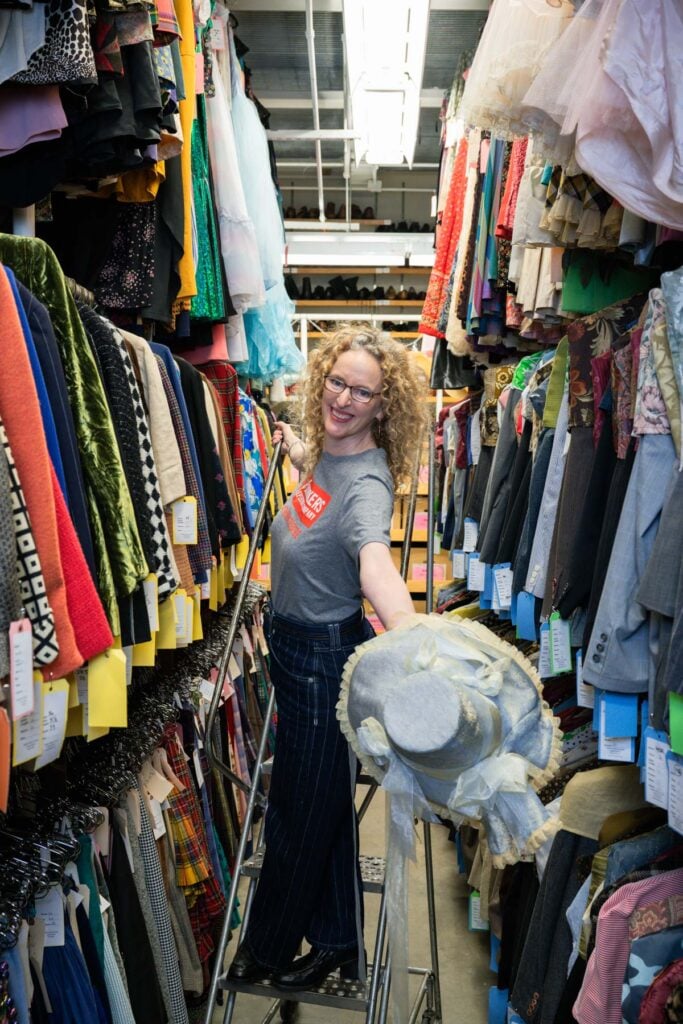
Chelsea was a part of SYC’s first-ever cohort back in 2007 as a Chapel Hill High School junior. This past July she directed the 20th anniversary, “Hello, Dolly!” – coming “full circle,” she says. Working alongside PlayMakers artists that first summer inspired Chelsea to study dramatic art at UNC. After graduate school, she returned to what she now calls her artistic home, helping train the next generation of students following the same path she once did.
The 2026-27 Season Lineup
‘Oedipus: King/Colonus’
Adapted by Carey Perloff with original
music by David Coulter
Sept. 9-27, 2026
Experience Sophocles’ epic trilogy brought to life in a sweeping tale of fate, prophecy and reckoning. This fresh adaptation breathes life into the ancient tale of a king’s search for truth – and the devastating consequences of what he finds.
‘Angry, Raucous,
and Shamelessly Gorgeous’
By Pearl Cleage
Oct. 14 – Nov. 1, 2026
When retired actress Anna Campbell plans her career-defining comeback to the stage, she discovers she’s being replaced with an ambitious young woman with a questionable background. This razor-sharp comedy explores generational tensions, friendship and how art has a life of its own.
‘Our Town’
By Thornton Wilder
Nov. 18 – Dec. 6, 2026
In the small town of Grover’s Corners, ordinary moments reveal extraordinary beauty. This Pulitzer Prize-winner is a heartfelt, timeless portrait of love, family and the fleeting nature of life, reminding us to cherish the here and now.
‘The Piano Lesson’
By August Wilson
Jan. 27 – Feb. 14, 2027
In 1936, a brother and sister clash over a priceless heirloom piano chronicling their family’s legacy. Sell it for land, or preserve it as history? This Pulitzer Prize-winning drama explores heritage, identity and the cost of moving forward when the past refuses to stay silent.
‘John Proctor Is the Villain’
By Kimberly Belflower
Mar. 3-21, 2027
As five teenage girls in a small Southern town study “The Crucible,” they start to challenge not only the literary classic, but the power dynamics at work in and out of the classroom. This electrifying, funny and urgent play rattles our assumptions about heroes, villains and what truth to believe in.
‘The 39 Steps’
By Patrick Barlow
April 7-25, 2027
Mix a Hitchcock thriller with madcap theatrical flair, and you get “The 39 Steps.” In this beloved tour de force, a mysterious murder launches Richard Hannay on a whirlwind spy adventure. Four actors play more than 50 roles in this wildly inventive, laugh-out-loud comedy that keeps you on the edge of your seat.
PlayMakers kicked off the anniversary celebrations with a gala in May and is planning more throughout the year, including a 50th birthday party to celebrate with subscribers in September and, with the fall production of “Our Town,” a welcome-back gathering for anyone who has worked with PlayMakers – or the Carolina Playmakers before that. Plans for an alumni cabaret, timed to a broader alumni weekend the department of dramatic art is holding for its own 90th anniversary in the spring, are underway, with talk of staging it in New York as well.
As she ushers PlayMakers into the future, Vivienne is also looking further back to look forward. She plans to launch the American Folk Play Project, reviving a Carolina Playmakers tradition that ran from 1919 into the 1960s, when short plays “of, about and for North Carolina” toured communities across the state. This fall, PlayMakers will invite writers from across North Carolina – including a category for high school students – to submit new works. Selected plays will receive public readings during Carolina Performing Arts’ new All. Together. Now. festival in February, with the long-term goal of launching a new statewide touring production.
Meanwhile, student tickets and $20 seats remain available for every production – a reflection, Vivienne says, of her belief that PlayMakers serves both UNC and the broader community. “We are both the university theater, and proud to be that, but we are also this region’s professional resident theater, and that connection to community is really important to me,” she says. “From a connectivity and engagement perspective, how do you remain vibrant and relevant?”
The answer, it seems, is already onstage. “I hope PlayMakers is defined as much by its traditions as by its forward thinking,” Vivienne says.